








 English
 Français
 Deutsch
 Italiano
 Español

Non-fiction
Technologie
 Publié le 10 févr. 2026
Mis à jour le 10 févr. 2026
Publié le 10 févr. 2026
Mis à jour le 10 févr. 2026
 3 min
3 min
Non-fiction
Technologie
Publié le 10 févr. 2026
Mis à jour le 10 févr. 2026
3 min


 Contribuer
Are You Ready for Shopify Headless? Here’s How to Tell
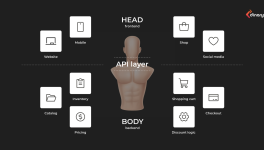
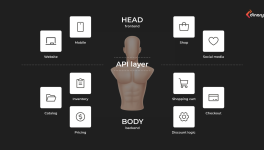
Shopify Headless sounds exciting: custom design, better performance, more freedom. But the big question is: should you actually make the switch?
Not every business needs to go headless. For some, it’s a powerful next step. For others, it might be too early or unnecessarily complex.
Here’s how to figure out if Shopify Headless fits your business right now or if it’s something to plan for down the line.
First: What does your store struggle with?
Before diving into APIs and custom frontends, it’s worth asking a few practical questions.
If you answer “yes” to any of these, headless might be the right move:
- Your store is getting slower as you add features
- Shopify’s built-in themes don’t support the user experience you want
- You’re struggling to deliver a consistent experience across mobile, app, and web
- You need better integration with external tools (ERP, CMS, custom CRM)
- You’re scaling fast and want to future-proof your architecture
If these sound familiar, your current setup might be holding you back more than you realize.
What you’ll need to make it work
Shopify Headless is powerful, but it’s not plug-and-play. It comes with extra responsibilities.
Here’s what a headless-ready business typically has in place:
- A development team (in-house or partner): Going headless requires coding, deployment, and integration knowledge. You’ll need developers who understand frameworks like React or Vue, plus how to work with APIs.
- Clear design goals: Headless gives you design freedom, but you’ll need a plan. What experience do you want to build? What matters most to your customers?
- Performance expectations: If site speed and personalization are priorities, headless will give you the tools, but you’ll be managing caching, CDN setup, and performance tuning directly.
- Growth mindset: If you’re experimenting, scaling, or looking to move fast, the extra flexibility pays off. Headless gives you a tech stack that adapts as your business grows.
Shopify plan differences: Why it matters
You can go headless on any Shopify plan but not all plans offer the same capabilities.
For example:
- Shopify Plus unlocks access to the Checkout API, allowing full checkout customization
- Lower-tier plans must stick with Shopify’s default checkout (which limits some UX control)
- Higher-tier plans also offer increased API rate limits and stronger performance under heavy traffic
If checkout customization or global scaling is in your roadmap, Shopify Plus paired with headless may be your ideal setup.
Final thought
Shopify Headless isn’t for everyone but for growing or scaling brands, it’s a smart move that puts you back in control of the user experience. If your store is bumping up against the limits of “standard,” it might be time to build something custom on your own terms.





 Technologie













 Tu peux soutenir les auteurs qui te tiennent à coeur








Commentaire (0)