








 English
 Français
 Deutsch
 Italiano
 Español


Non-fiction
Technology
 Published Sep 21, 2026
Updated Sep 21, 2026
 6 min

Non-fiction
Technology
Published Sep 21, 2026
Updated Sep 21, 2026
6 min


Jan van den Berg heeft ruim 40 jaar ervaring in projectmanagement, met focus op EPC-projecten in off...
 Creative Transparency Label
 All audiences
 Image /
Human image
 Text /
Hybrid - by humans and AI

 Contribute
BPI: The Third Metric Your EVM Dashboard Is Missing
CPI tells you if you're spending efficiently. SPI tells you if you're on schedule. Neither tells you if you're making money.
Every serious project control dashboard tracks two numbers religiously: CPI and SPI.
Cost Performance Index. Schedule Performance Index. Decades of Earned Value Management practice have made these the default language of Project health. Green, amber, red. On budget, on schedule, or not.
And yet ask the question that actually matters to the business — is this Project making money? — and CPI and SPI have nothing to say.
That gap is not a small oversight. It's why projects can show green dashboards for months while quietly destroying the profit they were supposed to deliver.
What CPI and SPI Actually Measure
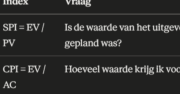
CPI = Earned Value ÷ Actual Cost. It tells you how efficiently you are converting spend into completed work. A CPI of 1.0 means you are getting a euro of value for every euro spent. Below 1.0, you are burning more than you are earning.
SPI = Earned Value ÷ Planned Value. It tells you whether you are progressing at the rate the schedule assumed. An SPI of 1.0 means you are exactly on pace.
Both are genuinely useful. Both have been the backbone of Project controls for decades. And both share the same blind spot: they measure performance against a plan, not performance against profitability.
A Project can hold CPI = 1.0 and SPI = 1.0 for months — perfectly on budget, perfectly on schedule — while the contract margin erodes underneath it through Scope creep, unfavorable change orders, or risk materializing exactly as planned but at a cost the original bid never priced correctly. CPI and SPI will not catch this. They were never designed to.
The Missing Third Metric
Benefits Performance Index — BPI — closes that gap.
BPI = (Contract Value − Current EAC) ÷ Baseline Profit
Where Contract Value is what the client is paying, Current EAC is your current best estimate of total Project cost at completion, and Baseline Profit is the profit margin you built the bid on.
The reading is immediate and unambiguous:
- BPI = 1.00 — you are delivering exactly the profit margin you planned
- BPI > 1.00 — you are generating more profit than baseline
- BPI < 1.00 — profit is eroding, even if CPI and SPI look fine
BPI sits alongside CPI and SPI as a third, independent lens. CPI asks: are we spending efficiently? SPI asks: are we on pace? BPI asks the question the business actually cares about: are we creating value, or quietly destroying it?
Why This Isn't Just "Another Metric"
It's easy to dismiss BPI as one more acronym competing for space on an already crowded dashboard. It earns its place because it's structural, not cosmetic.
CPI and SPI are both derived from the same baseline: the plan. They compare actual performance to planned performance. BPI comes from a different baseline entirely—the investment case that justified taking on the Project in the first place. It answers a question CPI and SPI structurally cannot: not "are we following the plan?" but "is the plan still worth following?"
This is precisely the shift the PMBOK Guide gestures toward when it states — three times — that all projects are investments. If that is true, then measuring only plan adherence, and never measuring return on that investment, leaves the most important number off the dashboard.
The Discipline BPI Demands
BPI is only as good as the EAC it is built on. This is not a weakness unique to BPI — it is the same dependency CPI has always had on accurate actual-cost data. But it is worth being explicit about, because BPI will not forgive sloppy inputs any more than CPI does.
Two disciplines make BPI trustworthy in practice.
First, build EAC bottom-up, from real remaining-cost estimates at the activity or work-package level, not by applying a CPI trend backward across the remaining Scope. A bottom-up EAC reflects what your team actually believes is left to spend. A CPI-derived EAC extrapolates past performance forward — useful as a sanity check, dangerous as your only source of truth.
Second, track the trend, not the point value. A single BPI reading can be noisy — one large invoice booked late, one estimate revised early, and the number moves without anything real having changed. What matters is the direction over several reporting periods. Three consecutive weeks of declining BPI is a real signal, even if any single week's number isn't precisely accurate. The trend reveals what one snapshot cannot.
What It Looks Like in Practice
On an €80 million mining infrastructure Project, BPI stood at 0.78 one month into execution — while traditional cost and schedule metrics were showing green. Translated into euros, that 0.78 represented roughly €1.8 million of profit erosion that CPI and SPI had not flagged, because neither was designed to.
Because BPI made the erosion visible early, it could be addressed systematically—not through panic, but through the same disciplined, bottom-up analysis any EVM practitioner would recognize. Twelve months later, BPI stood at 1.45: a 45% profit improvement above the original baseline, on the same Project, tracked with the same rigor applied to CPI and SPI throughout.
The point is not that BPI is a magic fix. It is that BPI made visible, months in advance, a business reality that the standard EVM dashboard had no way of showing at all.
Where BPI Fits
BPI is not a replacement for CPI and SPI. It is the metric that was always missing alongside them.
CPI protects cost efficiency. SPI protects schedule adherence. BPI protects the reason the Project was undertaken in the first place — the return on the investment it represents.
If your dashboard shows only two of these three numbers, it answers two-thirds of the question that actually matters.
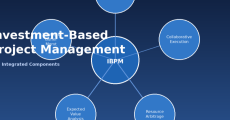
Jan van den Berg — Project Scheduler and IBPM Practitioner. 40 years in offshore, industrial, and infrastructure projects. The complete methodology is in "Investment-Based Project Management: Optimizing Profit Through Strategic Decision-Making," available on Amazon.
Intellectual property & credits

© Author's name / pen name
Jan Van Den Berg
Creative Commons license

Attribution required, no modifications,
non-commercial use only CC BY-NC-ND
non-commercial use only



 Technology





 You can support your favorite writers








Comments (0)