








 English
 Français
 Deutsch
 Italiano
 Español
Non-fiction
Cultura
 Pubblicato 15 apr 2026
Aggiornato 15 apr 2026
Pubblicato 15 apr 2026
Aggiornato 15 apr 2026
 15 min
Non-fiction
Cultura
Pubblicato 15 apr 2026
Aggiornato 15 apr 2026
15 min




 Contribuisci
Why Invest in Panodyssey?
By Claudia Moscovici
Currently, the world’s superpowers are lunging headlong into an AI race that makes the twentieth-century arms race pale by comparison. Unlike military technological innovations, Artificial Intelligence permeates every aspect of our social, financial, military, governmental and artistic lives. As early as 2017, China announced its “New Generation Artificial Intelligence Plan,” proposing that by 2030 the country should achieve “world-leading levels”. In 2019, President Trump signed an executive order claiming “continued American leadership in Artificial Intelligence is of paramount importance to maintaining the economic and national security of the United States.” The European Union is paving a third path by channeling AI research in a more prudent and human-centric manner via the 2024 EU AI Act. Its mission is to direct the rapid development of AI technology toward our continued human benefit while minimizing harm. The underlying premise of this Act is that advancing knowledge without also exercising wisdom can be a recipe for disaster.
As the intellectual historian Yuval Noah Harari indicates, knowledge and wisdom are not synonymous. Knowledge in itself is amoral. In Nexus (2024), Harari reminds us that while the invention of the printing press in 1440 spread useful knowledge and world religions to interconnect large groups, it also spread stories about witches that led to the torture and burning of tens of thousands of innocent people. Analogously, the Industrial Revolution led to great technological advancements such as electricity, trains and cars, but it also led to the spread of colonialism and the mass media tools and deadly weapons used by totalitarian regimes. Since history has proved time and again that knowledge is distinct from wisdom, the EU AI Act posits that the AI race should not be about who gets the most advanced AI technology first and fastest, but about who implements this new technology most wisely, so that it can be utilized by human beings to their greatest benefit and with the least adverse effects. Consequently, the EU AI Act aims to advance technological developments in AI while safeguarding human rights by promoting safe innovation; signaling to human beings when they are interacting with bots; banning high risk manipulation and biometric scoring, and encouraging human oversight of AI algorithms so they don’t run amok.
The urgent need for more ethical social media and cultural platforms
AI is an alien form of intelligence that is quickly exceeding human intelligence in memory, data gathering capacity and analysis. Although it has superhuman intelligence, AI lacks consciousness, or the capacity to feel empathy, pain, or love. What can this super-intelligent entity without feelings or moral boundaries do without proper human guidance and regulation? Well, we’ve already seen that it can do a lot of harm on our social media networks. The tech giants such as Facebook, YouTube and X, have been relying for years on AI algorithms to increase user engagement in order to maximize profits from ads. Mark Zuckerberg has stated that Facebook’s goal “is to help people to share more in order to make the world more open and to help promote understanding between people.” Indeed, this giant and ever-growing social network of 3 billion users has connected people all over the world, made possible new communities, and facilitated international collaborations. These are all enormous benefits to humanity. At the same time, in order to expand their membership and revenues, Facebook, YouTube, X and other major social media companies have created algorithms that reward maximum “human engagement”, meaning the greatest number of clicks, likes and shares, which in turn vastly increase their profits from ads. Impelled by this (ultimately) financial goal, social media algorithms have disseminated, shared and promoted fake news, amplified divisive political rhetoric, spread QAnon and other dangerous conspiracy theories, and propagated hate speech.
Social Media and their algorithms
To offer just one notable example, in 2017, Facebook algorithms shared and amplified anti-Rohingya inflammatory posts by a Buddhist monk named Wirathu, who incited an ethnic cleansing campaign against the Rohingya minority, which led to the murder of 24,000 people. The “clearance operation” by the Myanmar military, Tatmadaw, included the rape of 18,000 Rohingya women and girls, the burning of homes and the forced expulsion of 700,000 people to Bangladesh. Clearly, fueling such a catastrophe was not Facebook’s intended purpose. Rather, promoting this violence and chaos was the unintentional consequence of user engagement AI algorithms that maximize clicks and shares for the sake of increasing profits. Those algorithms arrived on their own to the conclusion that posts expressing fake news, outrage, divisive rhetoric and tribalism are viewed and shared far more than fact-based, empathic and thoughtful posts, so they increased user engagement by aggressively disseminating and promoting the most destructive posts. This can happen on any of the major social media, which operate on the same principles as Facebook. We urgently need ethical social media and cultural network alternatives committed to the responsible use of AI that are not incentivized by maximizing user engagement motivated by increasing ad revenues. This is what Panodyssey, the ethical European network for the arts, offers in its ad-free, ethical AI use cultural platform.
The growing need to protect human creativity and copyright from AI cannibalization
Albert Einstein has famously stated that “Imagination is more important than knowledge”. For millennia, human beings have had a monopoly on imagination. Today human imagination too is rapidly being overtaken by AI. As Yuval Noah Harari explains in Sapiens (2014) and Nexus (2024), the top achievements of our civilizations were propagated on social networks that spread the creations of human imagination, in the form of myths, stories about nationhood, music, literature, or conventions about money. Now, for the first time in history, human beings no longer have a monopoly on imagination. Just like in the realm of knowledge, AI may soon exceed us in creativity as well. For instance, AI has already created a top country hit, “Walk my Walk”, which topped the Billboard Country Digital Song Sales Chart in November 2025. In the field of creative writing, 45% of fiction authors, particularly those writing genre fiction such as fantasy, horror, science fiction, romance and crime, use AI generated content. Given how fast AI is spreading throughout the creative arts, it is urgently important to safeguard human creative works from being overtaken or cannibalized by AI.
This is what Panodyssey does in encouraging human creativity and protecting the rights of online human authors.
What is Panodyssey?
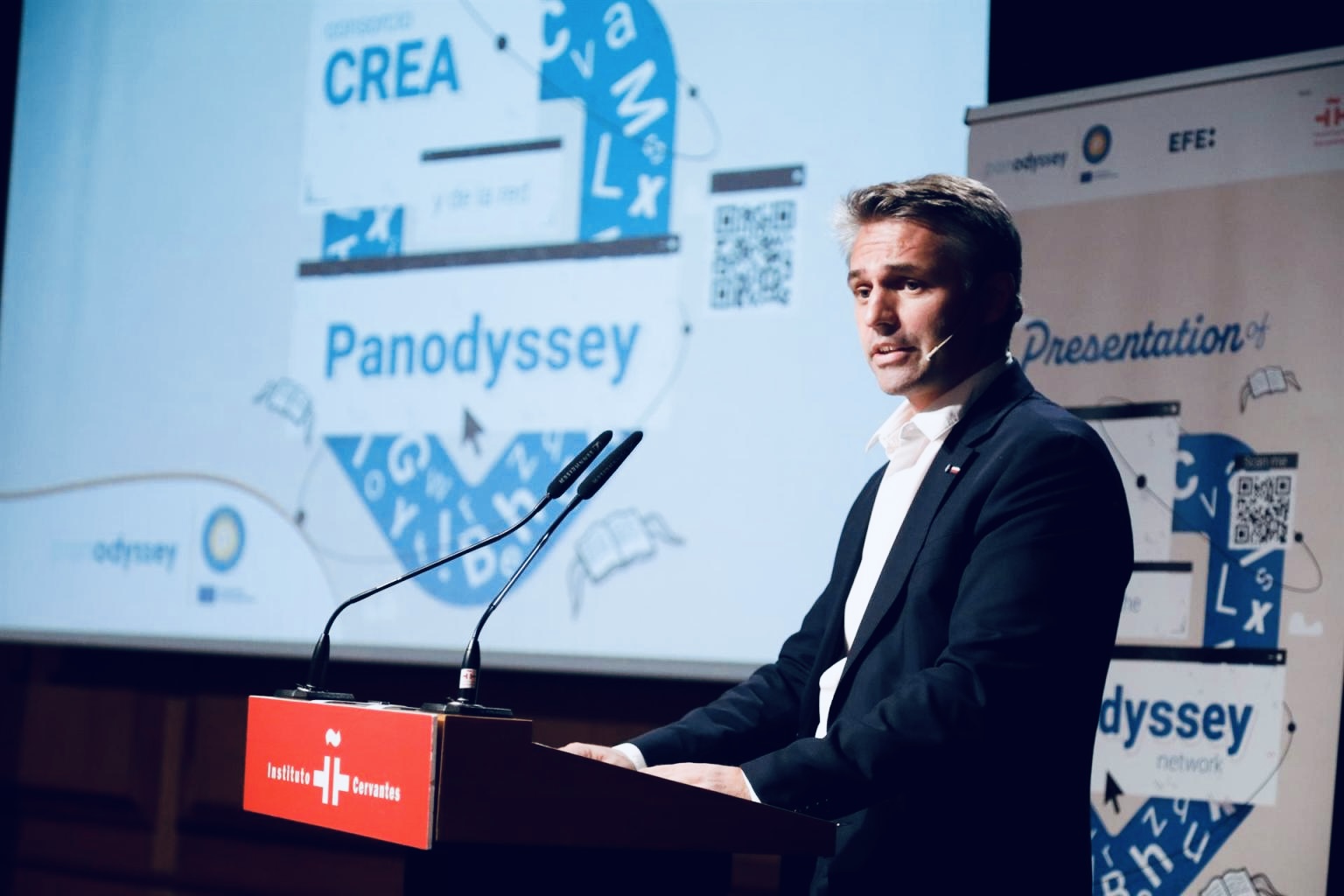
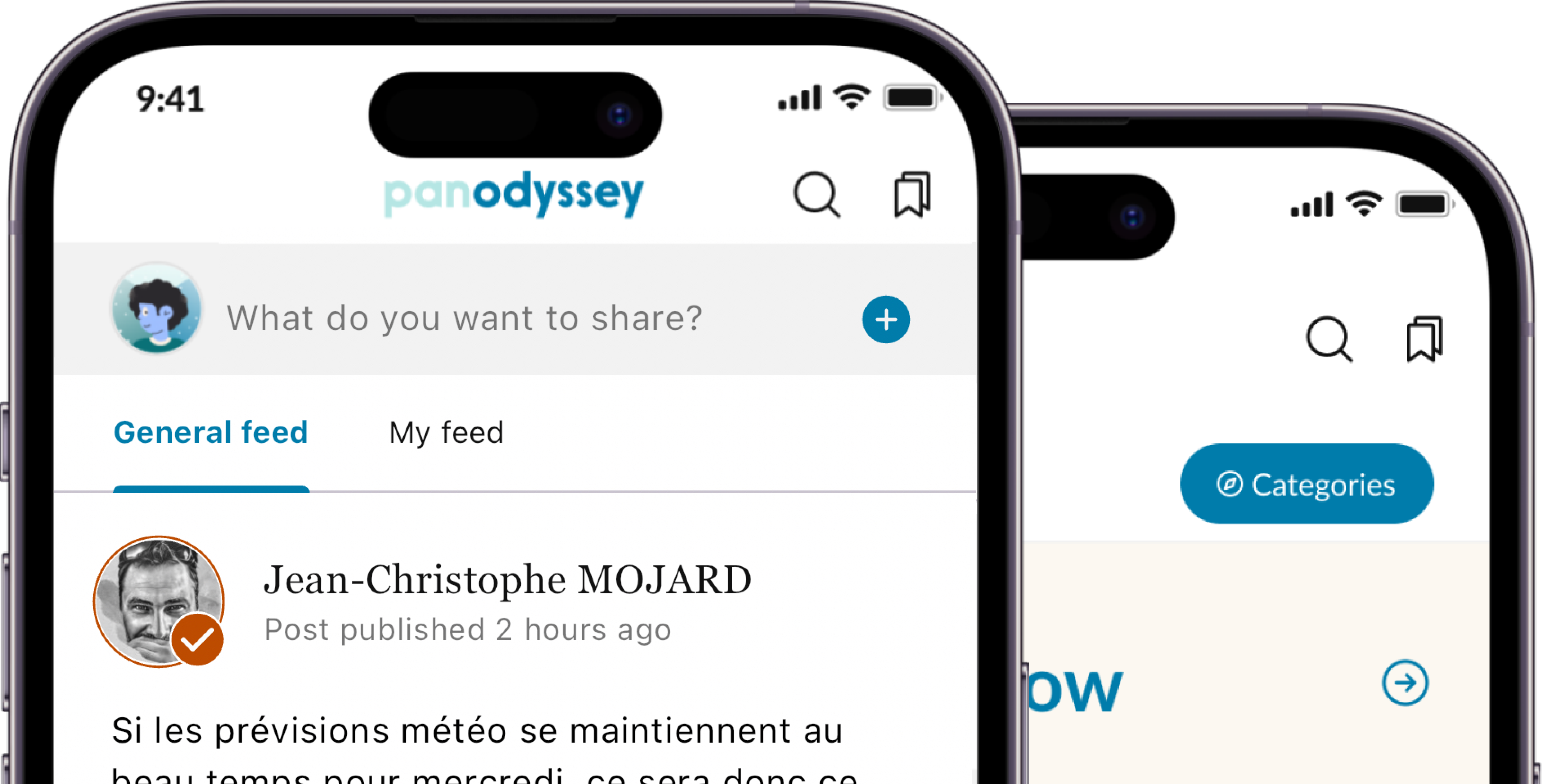
Panodyssey (https://www.panodyssey.com/en) is an interdisciplinary and international cultural platform for the creative arts, devoted in particular to writing. It was founded in 2018 by Alexandre Leforestier, a notable French entrepreneur and artistic director with a diverse background in music and digital innovation. Leforestier studied music at the conservatory in Rennes and later at the Sorbonne in Paris. He served as Managing Director of Abeille Musique from 2001 to 2014. In 2002, he launched the jazz record label Bee Jazz, producing over 100 albums, including collaborations with notable musicians such as Boulou & Elios Ferré, Alain Jean-Marie and Robert Wyatt. In 2007, Leforestier cofounded Qobuz, a high-resolution music streaming service, expanding the company’s operations throughout Europe. In 2018, Leforestier came up with the innovative concept of a democratic, multilingual, multicultural and interdisciplinary cultural platform, Panodyssey.com, where artists in every creative field and from all over the world can collaborate together on joint projects, complementing and translating each other’s works. This platform provides a digital environment free from advertisements and fake content, in conformance to European regulatory standards, such as GDPR and the Digital Services Act. Panodyssey organizes cultural events through its sister organization, also headed by Leforestier, CREA (Creative Room European Alliance), which is funded in part by the European Commission.
This fantastic interdisciplinary cultural website is particularly useful to writers. As Leforestier indicates, Panodyssey aims to bypass traditional publishing gatekeepers while fostering a dedicated community of creators and readers. This is all the more necessary for today’s writers, who are facing the challenge of two enormous and rapidly growing asymmetries:
1. The ratio between those who want to publish and literary agents or editors is disproportionately tipped against the writers. Most top literary agents in the US, for instance, receive an average of 2000 unsolicited queries from authors a month, a number that is rising exponentially as AI generated writing continues to proliferate.
2. Second, writers also confront the problem that while more and more people want to write, publish and be read, fewer and fewer people actually read. Studies indicate that there has been a 40 % drop over the past two decades in reading for pleasure. Panodyssey helps writers address both of these difficult challenges.
1. Solving the Writer-Agent Asymmetry Problem
Panodyssey utilizes “disintermediation”—the removal of middlemen—to provide writers with direct access to publishing tools and audiences, eliminating the need for a literary agent to “greenlight” a work.
- Direct-to-Audience Publishing: Authors can create “Creative Rooms” to host, organize, and publish their work instantly, moving beyond the “slush pile” and the 2,000-query-a-week (or more) bottleneck.
- Collaborative Ecosystem: The network allows writers to find and hire professionals—such as proofreaders, translators, photographers, and illustrators—directly on the platform. This professionalizes self-published work, helping it stand out without traditional agency backing.
- Legal & IP Protection: Every author and piece of content is certified, and the platform offers Intellectual Property protection tools. This gives writers the security typically managed by an agent’s contract department.
2. Solving the Shrinking Market of Readers Problem
Panodyssey addresses the lack of readers by creating a “virtuous circle” between creators and audiences through community-building and ethical engagement.
- Interdisciplinary Engagement: By mixing different art forms (visual arts, letters, etc.), the network attracts diverse audiences who might not identify as traditional “book readers” but are interested in broader cultural content.
- Ethical, Ad-Free Environment: Unlike traditional social media, Panodyssey is ad-free and focuses on “authentic content.” This creates a peaceful reading “ritual” that encourages long-form engagement rather than the distracted scrolling that often reduces reading time.
- Direct Monetization (Creative Rooms Prime): Authors can set subscription prices for their content. This allows them to thrive on a smaller, highly loyal “micro-community” of paying readers rather than needing the mass-market scale required by traditional publishers to break even.
- SEO and Discovery Tools: The platform provides advanced SEO and metadata features to help niche works find their specific target audience across the web, effectively expanding the “discoverable” market for independent writers
Panodyssey’s educational mission: Green Tales (collaboration with the Instituto Cervantes)
In addition to cultivating an online international community dedicated to promoting writers and artists, Panodyssey is also committed to projects that educate and encourage the creativity of the younger generations. For several years, Panodyssey collaborated with the Instituto Cervantes on Green Tales. Green Tales is a European artistic and educational project developed over two years with four schools and one hundred students in Germany, Spain, Iceland and Turkey. Together, they created an animated short film exploring the elements of nature and environmental issues through the eyes of children: https://youtu.be/lj3dpX8GkFk
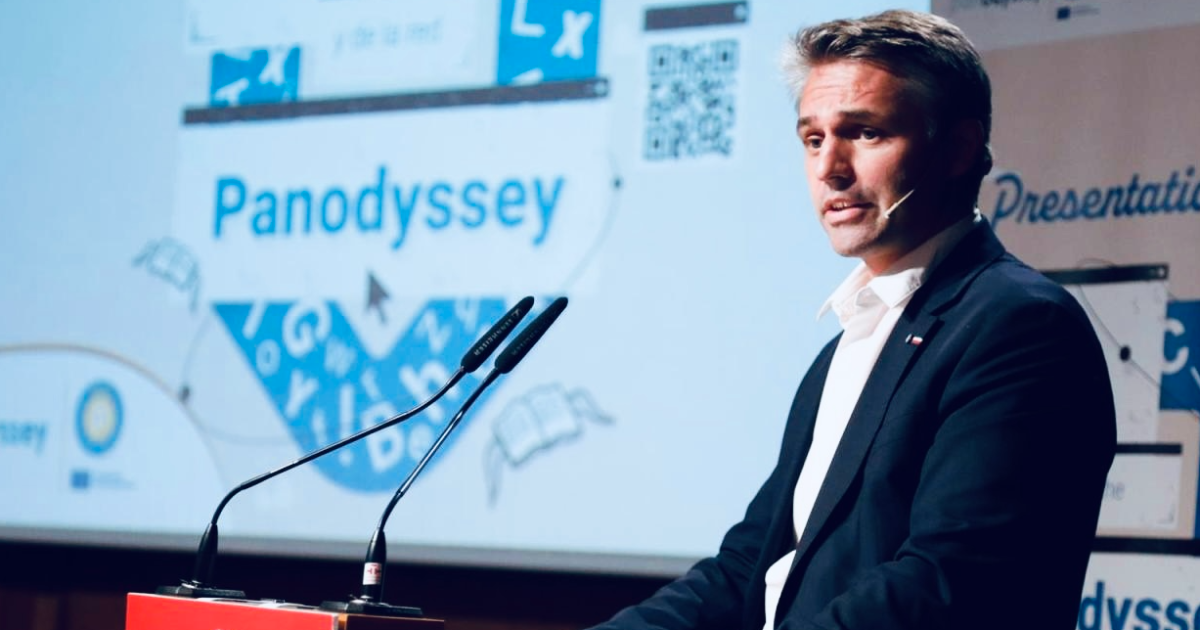
The culmination of this collaboration was the Green Tales Conference on February 9, 2026, at the Instituto Cervantes in Brussels, which brought together educators, artists, cultural institutions and European partners who took part in the journey, to present the work and share its insights.
The evening included the screening of the film as well as presentations and discussions centered around the themes of creation, education and the environment. The event, sponsored by the International Yehudi Menuhin Foundation, concluded with a string trio concert, featuring a musical program inspired by nature, childhood and transmission.
Such educational projects for the young generation are especially important nowadays. AI is transforming our world at a faster pace than most of us can keep up with or even grasp. If we don’t manage to govern the rapid expansion AI responsibly in the near future, it will soon govern us.
No one will be more affected by these cataclysmic transformations in education, the job market and creativity than our children. No one stands to benefit more from the responsible and ethical use of AI than our children. Panodyssey is committed to collaborating with leading European cultural institutions to encourage and protect the most important skills that the young generations will need to adapt to our rapidly changing world. As Yuval Noah Harari states in 21 Lessons for the 21st Century (2018),these essential skills are: critical thinking, communication, collaboration and creativity. The Green Tales project helped students exercise all of these skills. Collaborating on Green Tales encouraged them to think about global problems related to the environment and climate change. They communicated their ideas with their classmates and with students across the globe. They formed their own analyses and value judgments about how to protect the environment. And they expressed their ideas and conclusions in a creative animated video.
Why invest in Panodyssey?
Investing in projects such as Green Tales, facilitated by Panodyssey in collaboration with the Instituto Cervantes, entails investing in our children’s future. Investing in social and cultural media websites such as Panodyssey that respect and protect our creative content entails investing in our present and safeguarding our future. While still a young startup, Panodyssey has shown immense promise and proven accomplishments. Moreover, Panodyssey is the successful embodiment of the principles articulated by the EU AI Act. It is a social media and artistic platform that encourages the use of AI in a responsible and ethical manner, which protects human beings and their creative works.Panodyssey also participates in a network of educational projects with leading European cultural institutes that prepare our children for managing the technological upheavals that they will inevitably face. Both through its international interdisciplinary art and literature platform and through its educational collaborations with prominent cultural institutes, Panodyssey represents the best that a creative social network has to offer. This unique and visionary cultural platform points to the direction of the future, as more and more countries, companies and institutions will come to realize that AI technological progress should combine knowledge with wisdom by supporting rather than supplanting human agency and creativity.






 Cultura




































 Puoi sostenere i tuoi scrittori preferiti






Commento (0)